How to Specify Hot Dip Galvanizing Properly
Most galvanizing disputes are specification failures, not coating failures. A clause-by-clause guide to what belongs in a galvanizing specification, and an 11-point checklist before you issue the enquiry.
Most galvanizing disputes are specification failures rather than coating failures. A purchase order that says "hot dip galvanized to ISO 1461" and nothing else leaves the coating thickness, the inspection method and the treatment of damage all undefined. This guide sets out what a complete galvanizing specification contains and why each clause is there.
What should a hot dip galvanizing specification include?
A complete specification states the standard, the required coating thickness by section thickness, how thickness will be measured and where, the acceptance and rejection criteria, how damaged areas will be repaired, and who inspects and certifies. Naming ISO 1461 alone sets the minimum coating but leaves inspection, repair and documentation open to interpretation.
Clause by clause
1. The standard
Cite the standard by number and year. For structural steelwork this is normally ISO 1461, which covers hot dip galvanized coatings on fabricated iron and steel articles.
State whether the coating must also satisfy any project or client standard. Where two documents conflict, say which governs.
2. Coating thickness
ISO 1461 sets minimum mean coating thickness according to the thickness of the steel article. Reproduce the applicable rows in the specification rather than referring to them, so the fabricator and the inspector read the same table.
| Steel thickness | Minimum mean coating | Minimum local coating |
|---|---|---|
| Under 1.5 mm | 45 µm | 35 µm |
| 1.5 mm to 3 mm | 55 µm | 45 µm |
| 3 mm to 6 mm | 70 µm | 55 µm |
| Over 6 mm | 85 µm | 70 µm |
If a heavier coating is required, state the required mean explicitly and confirm the fabricator can achieve it. A heavier coating is not automatic; it depends on steel chemistry and bath practice.
3. Steel chemistry
Silicon and phosphorus content in the steel govern how the zinc-iron alloy grows. Reactive steels produce thicker but sometimes duller and more brittle coatings.
Where appearance matters, or where a predictable coating thickness is needed, state the acceptable silicon range and require mill certificates. It is far cheaper to control this at procurement than to argue about a grey, rough coating after dipping.
4. Design for galvanizing
The specification should require that fabrication drawings allow for:
- Venting and draining holes so air escapes and zinc drains from hollow sections. Sealed hollow sections are a safety hazard in the bath.
- Free drainage with no pockets that hold zinc or, later, rainwater.
- Handling points so items can be suspended in the bath without distortion.
- Section size within bath capacity. State the maximum single-dip length available. Our own zinc vat is 8.0 m long, which sets the point at which a member has to be double-dipped or spliced.
- Masking of threads and machined surfaces that must not be coated.
5. Surface condition before dipping
Galvanizing will not cover what the pickling process cannot remove. The specification should require removal of weld slag, paint, oil, grease and heavy scale before delivery to the galvanizer, and should say who bears the cost when it is not done.
6. Inspection and testing
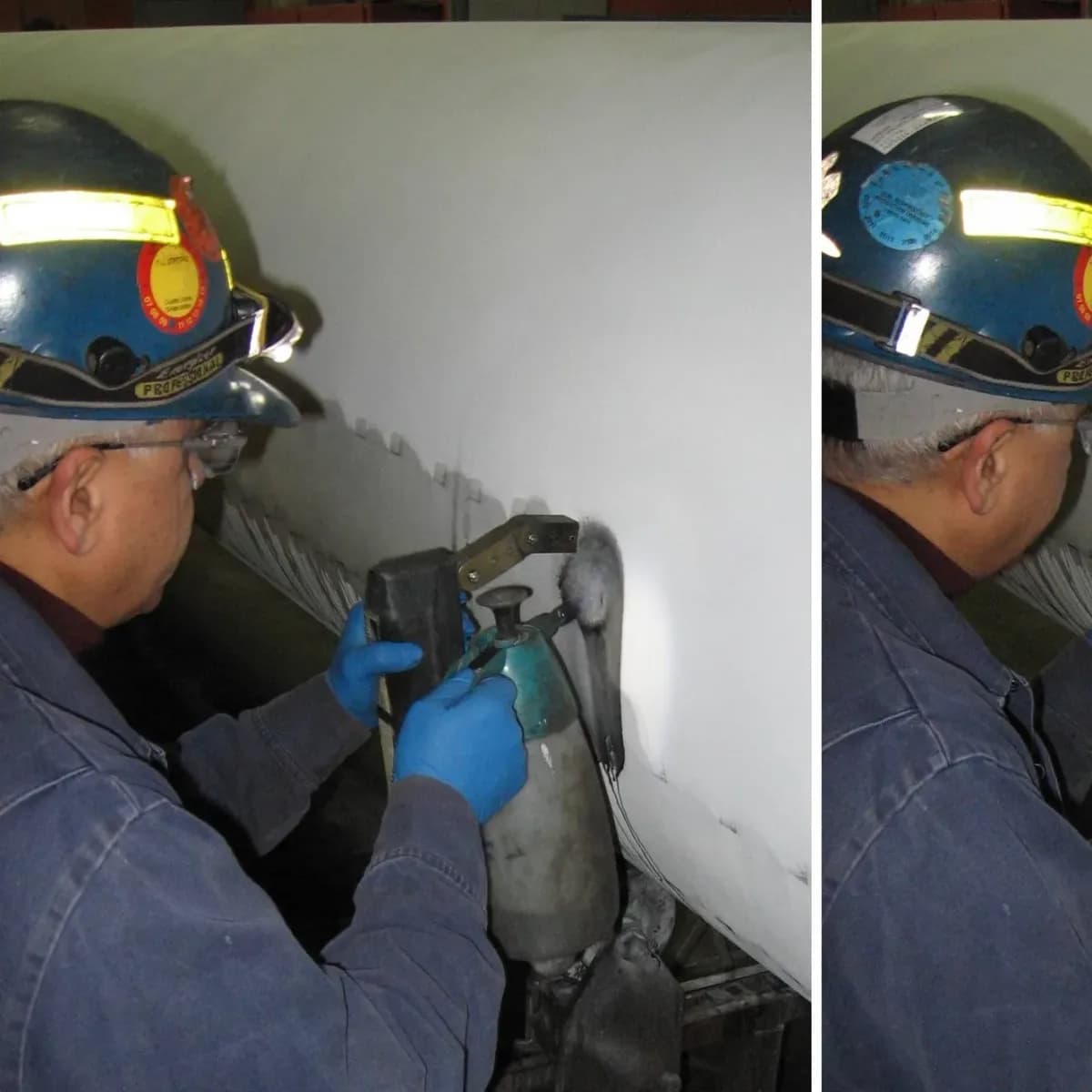
State the measurement method, the number of readings and where they are taken. Magnetic thickness gauges are the normal method for coating thickness on structural steel.
Define:
- the sampling rate per batch
- the number of readings that make up a reference area
- who witnesses the inspection
- what happens when a reference area fails
Also state what visual defects are rejectable. Coating appearance varies legitimately: matt grey areas, bright spinning marks and minor bath residue are not defects. Bare patches, blisters, flux inclusions and heavy lumps that prevent assembly are.
7. Repair of damaged areas
Some damage is unavoidable between the galvanizing plant and final erection. ISO 1461 permits renovation of damaged areas up to a defined proportion of the surface. The specification should state the permitted repair method — zinc-rich paint, zinc spray or a zinc alloy stick — and the thickness the repaired area must reach.
Without this clause, damage tends to be repaired with whatever silver paint is on site, which provides no cathodic protection at all.
8. Documentation
Require, as a minimum:
- a certificate of conformity referencing the standard
- coating thickness records per batch
- mill certificates for the steel
- any third-party test reports
At Safe Steels, general testing runs through our in-house laboratory, and specific testing goes to the Central Material Testing Laboratory in Lalitpur, so results are independently verified rather than self-certified. Ask any galvanizer to name where their verification testing is done.
A specification checklist
Use this as a final read-through before issuing an enquiry:
- Standard cited with year, and precedence stated where documents conflict.
- Coating thickness table reproduced for the section thicknesses in the job.
- Any heavier coating requirement stated explicitly and confirmed as achievable.
- Steel chemistry limits stated where appearance or thickness must be predictable.
- Venting, draining and handling requirements passed to the detailer.
- Maximum single-dip length confirmed against the galvanizer's bath.
- Surface cleanliness responsibility assigned.
- Inspection method, sampling and witnessing defined.
- Rejectable defects distinguished from acceptable appearance variation.
- Repair method and repaired-coating thickness specified.
- Documentation package listed.
Why this matters commercially
An underspecified order transfers risk to whoever has least control over it. If the coating thickness is not stated, the galvanizer will work to the minimum. If inspection is not defined, disputes are settled by argument rather than measurement. If repair is not specified, the weakest part of the coating will be the part applied on site by hand.
None of these clauses add much cost at enquiry stage. All of them are expensive to resolve after the steel is coated.
For help specifying galvanizing on a live project, talk to our engineers — we will review a draft specification against what is actually achievable in the bath.
Frequently asked questions
- Is citing ISO 1461 enough on a purchase order?
- It sets the minimum coating thickness but leaves inspection method, sampling, rejection criteria, repair of damage and documentation undefined. Those gaps are where most galvanizing disputes originate, so state them explicitly.
- Who is responsible for cleaning steel before galvanizing?
- Galvanizing will not cover weld slag, paint, oil or heavy scale, because pickling does not remove them. Assign that responsibility in the specification, and state who bears the cost if material arrives at the plant uncleaned.
- Why do galvanized surfaces vary in appearance?
- Matt grey patches, bright areas and minor spinning marks are normal and reflect steel chemistry and cooling rate rather than coating quality. Bare patches, blisters, flux inclusions and lumps that prevent assembly are genuine defects.
- What documentation should a galvanizer provide?
- At minimum a certificate of conformity citing the standard, coating thickness records per batch, and mill certificates for the steel. Ask where independent verification testing is carried out.
Sources and standards
About the author
Safe Steels Engineering Team
Fabrication, galvanizing and erection
Written and reviewed by the engineering staff at Safe Steels Pvt. Ltd., a mechanical and structural steel fabricator, galvanizer and erector operating a 12,500 m² facility at Chainpur-1, Chitwan. The team works to ISO 1461 for hot dip galvanizing and verifies material through the Central Material Testing Laboratory, Lalitpur.
More about Safe Steels